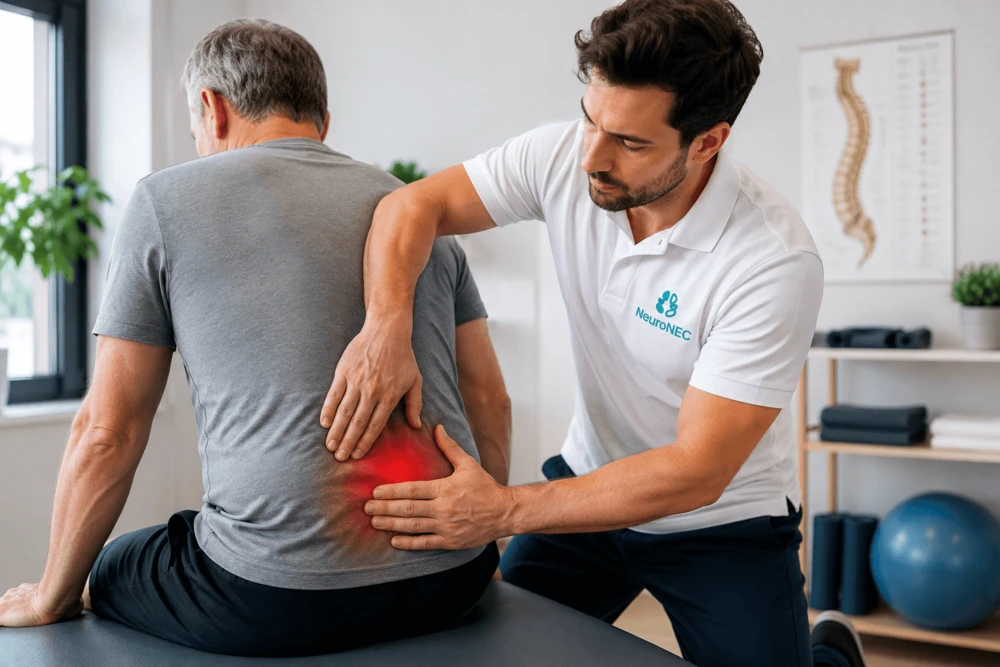
Lumbar Spinal Stenosis Minimally Invasive Endoscopic TreatmentDecompression · Biportal UBE Technique

Pain, heaviness or weakness in your legs when walking?

Lumbar spinal stenosis can compress the nerves and progressively make it more difficult to walk or stand.

Find out which treatment may be appropriate for your condition and whether it can be treated with a minimally invasive endoscopic approach.

Dr. François Lechanoine

Neurosurgeon specializing in minimally invasive and endoscopic brain and spine surgery.

What Is Lumbar Spinal Stenosis?

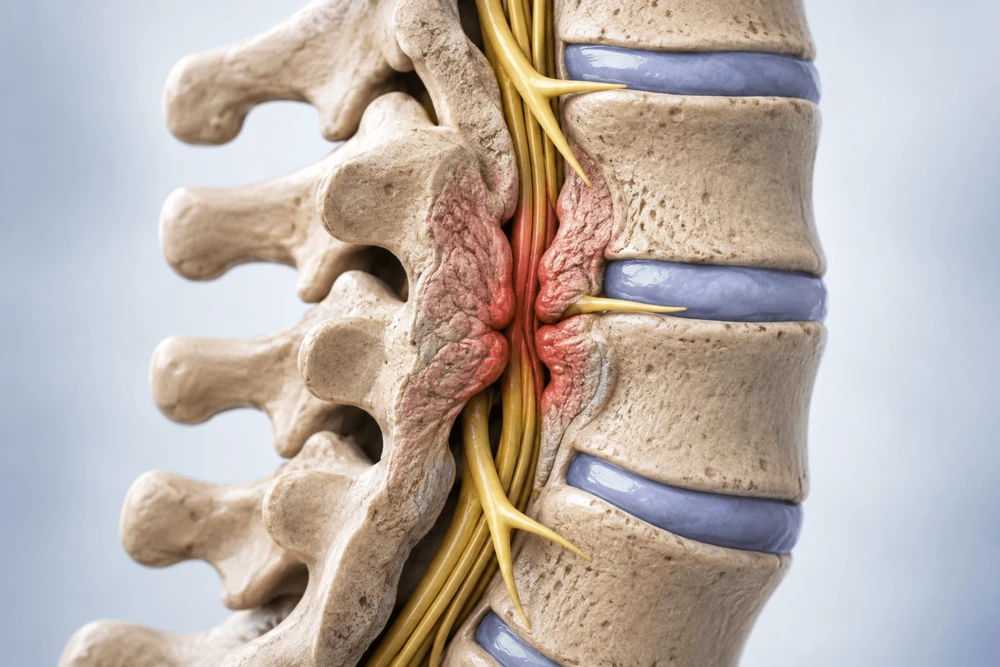
Lumbar spinal stenosis is a narrowing of the spinal canal or the spaces through which the nerves pass.

Over time, degenerative changes in the vertebrae, discs, joints and ligaments can reduce the space available for the nerves.

This can result in pain, tingling, weakness and progressive difficulty walking.

The severity of the stenosis and the most appropriate treatment should be assessed by considering the symptoms, neurological examination, MRI/CT imaging and the impact on daily life.

Is Walking Becoming More Difficult? Recognize the Symptoms of Lumbar Spinal Stenosis

Lumbar spinal stenosis can compress the nerves and progressively make it more difficult to walk or stand.

  • The most common symptoms include:
  • lower back pain
  • leg pain
  • heaviness or fatigue in the legs
  • tingling or numbness
  • loss of strength
  • the need to stop while walking
  • relief when sitting or bending forward
  • progressive reduction in walking distance

Do you have these symptoms? Request an assessment

First, We Evaluate Conservative Treatment

Surgery Is Not Always the First Option
When clinically appropriate, the treatment pathway may begin with conservative treatments and rehabilitation.

The goal of NeuroNEC is to identify the treatment that is truly necessary for each patient, avoiding unnecessary surgical procedures.
The pathway may include:

  • neurosurgical assessment
  • physiotherapy and rehabilitation
  • pain management
  • recovery of mobility
  • clinical monitoring
  • specialist reassessment

When May Lumbar Spinal Decompression Be Indicated?

Surgery may be considered when pain persists despite adequate conservative treatment, when symptoms significantly affect quality of life, or when neurological deficits are present.

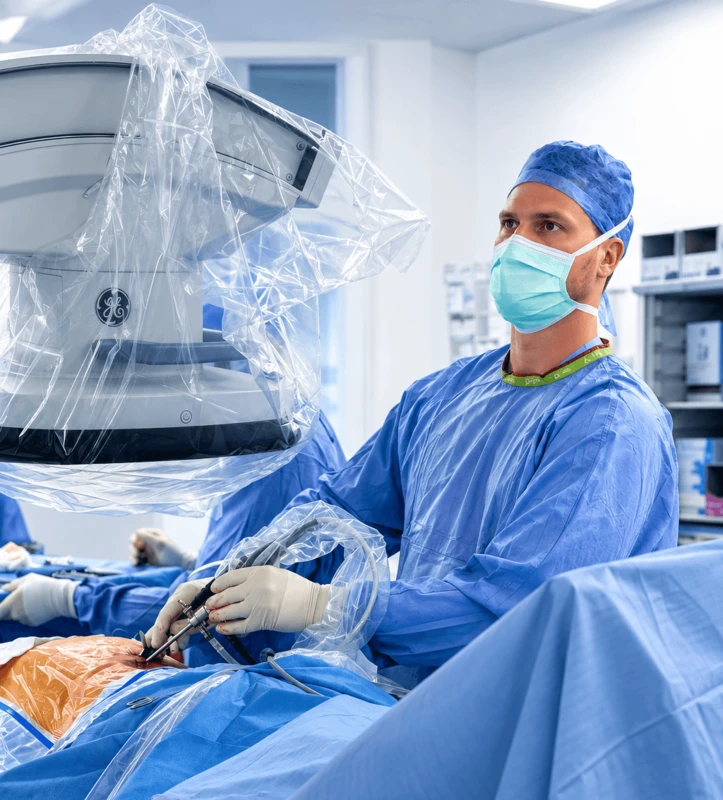
NeuroNEC prioritizes minimally invasive and endoscopic techniques aimed at treating the cause of nerve compression while reducing trauma to the surrounding tissues.

Benefits of the Minimally Invasive Endoscopic Approach

Una chirurgia pensata per ridurre l'impatto sul paziente

When indicated, the minimally invasive endoscopic approach allows for:

  • smaller surgical access
  • less impact on surrounding tissues
  • early mobilization
  • personalized anesthesia pathway
  • early rehabilitation
  • gradual return to normal activities

Find out whether your condition can be treated with a Minimally Invasive Endoscopic Approach

Xperience: Not Just Surgery, but a Complete Care Pathway

Spine treatment does not end with surgery.
The NeuroNEC Xperience Program integrates into a single pathway:

Specialist Assessment

Analysis of the patient’s medical history, symptoms and diagnostic examinations.

Preparation for Treatment

Functional preparation and personalized organization of the care pathway.

Minimally Invasive Surgery

When indicated, endoscopic treatment of the condition using the latest technologies.

Personalized Anesthesia

Anesthesia protocol tailored to the patient and the procedure, generally using an “awake” approach.

Early Rehabilitation

Mobilization and Functional Recovery.

Follow-up

Continuity of care through the NeuroNEC network.

Have You Already Been Recommended Spine Surgery?

Before making a decision, you can request a specialist second opinion.
If you have already undergone an MRI or CT scan, you can send your medical documentation to the NeuroNEC Patient Manager.
Dr. Lechanoine will assess your clinical condition and imaging to determine which treatment pathway may be most appropriate.
REQUEST A SECOND OPINION

Dr. François Lechanoine

Neurosurgeon specializing in minimally invasive and endoscopic brain and spine surgery.

Dr. Lechanoine developed his professional career at neurosurgical centers in Europe and abroad, specializing in modern minimally invasive and endoscopic techniques.

He was the first neurosurgeon to introduce and perform UBE – Unilateral Biportal Endoscopy in Italy, subsequently contributing to its adoption across Europe and worldwide through clinical practice, training and scientific research.
MEET DR. LECHANOINE

Frequently Asked Questions About Lumbar Spinal Stenosis

Does lumbar spinal stenosis always require surgery?

No. The indication for surgery depends on the severity of the symptoms, any neurological impairment, the impact on quality of life and the response to conservative treatments. The need for surgery is assessed on an individual basis.

When should I see a neurosurgeon?

When symptoms persist, significantly limit the ability to walk or perform normal daily activities, or when neurological symptoms such as loss of strength or sensation develop.

Can I send my MRI scan?

Yes. Your radiological imaging can be sent to the Patient Manager to arrange a specialist assessment.

Can spinal stenosis be treated with endoscopic surgery?

In many selected cases, minimally invasive endoscopic techniques can be used. The choice depends on the anatomical and clinical characteristics of each patient, and a specialist assessment is required.

Does surgery necessarily mean having a spinal fusion (with an implant)?

No. Decompression and stabilization are different procedures. When indicated, an endoscopic approach may allow the nerves to be decompressed while preserving the anatomical structures and mobility as much as possible, without necessarily requiring spinal fusion.

Is recovery after endoscopic spine surgery a long process?

Every patient has a different recovery time, and each case must be assessed individually. In general, when indicated, minimally invasive endoscopic surgery aims to minimize the impact on surrounding tissues, preserve anatomical structures and promote early mobilization and progressive functional recovery.

Do You Have Pain, Heaviness or Weakness in Your Legs When Walking?

Request a Specialist Assessment and a Personalized Quote.
Landing Page Contact Form
Available Diagnostic Documentation
Please indicate which examinations or medical reports you already have available. You do not need to attach any documents at this stage.
How would you prefer to have your initial consultation?
Choose the option that is most convenient for you.
Privacy Policy